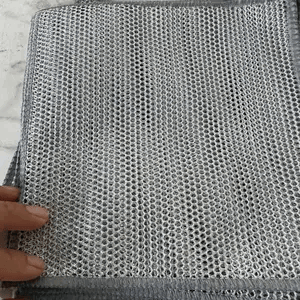
Why polyester and not steel
Steel wool scours because it is harder than the grease and harder than the pan. The pan is what loses. A metallic-looking polyester weave scours on texture instead, so the coating survives.

Cart (0)
Your cart is empty


Avera Non-Scratch Wire Dishcloth
A sponge dies in about three weeks, and it stopped actually scrubbing long before that. Steel wool scrubs, but it takes the non-stick with it. This is the version that does one without doing the other.
Non-stick pans, glass, ceramic hobs, stainless steel, taps, tile, enamel, oven doors, extractor hood filters. The fibre is softer than all of them.
Give anything coated, polished or lacquered a test in a corner first — that is sensible with any abrasive, and it takes ten seconds.
Wet it, one drop of washing-up liquid, and fold it into quarters when you want pressure. Opened out flat it wipes a worktop or a hob in one pass.
The fine pores are what turn very little soap into real foam, so start with less than you would use on a sponge.
Rinse under a hot tap, wring it out and hang it. An open weave lets go of grease and then dries, which is the whole reason it does not start to smell.
It goes in the washing machine too — put it in a laundry bag. What it does not like is being left balled up wet in the bottom of the sink.
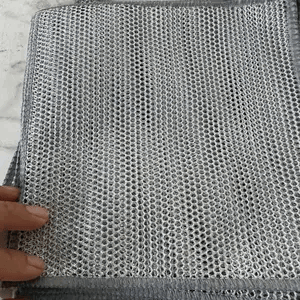
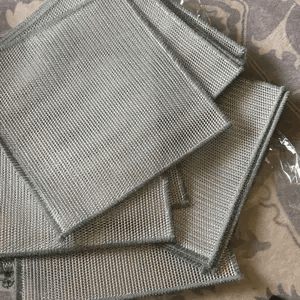
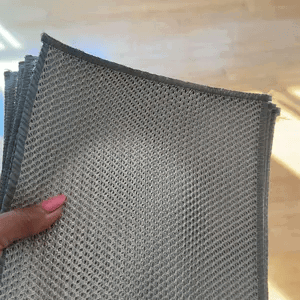
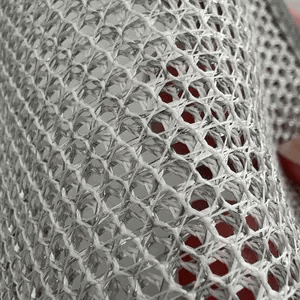
Woven polyester with a metallic finish, in a double-sided diamond lattice, with a stitched border rather than a cut one so it does not fray.
There is no steel in it. That is not a compromise — it is the reason it can go on a non-stick pan at all.
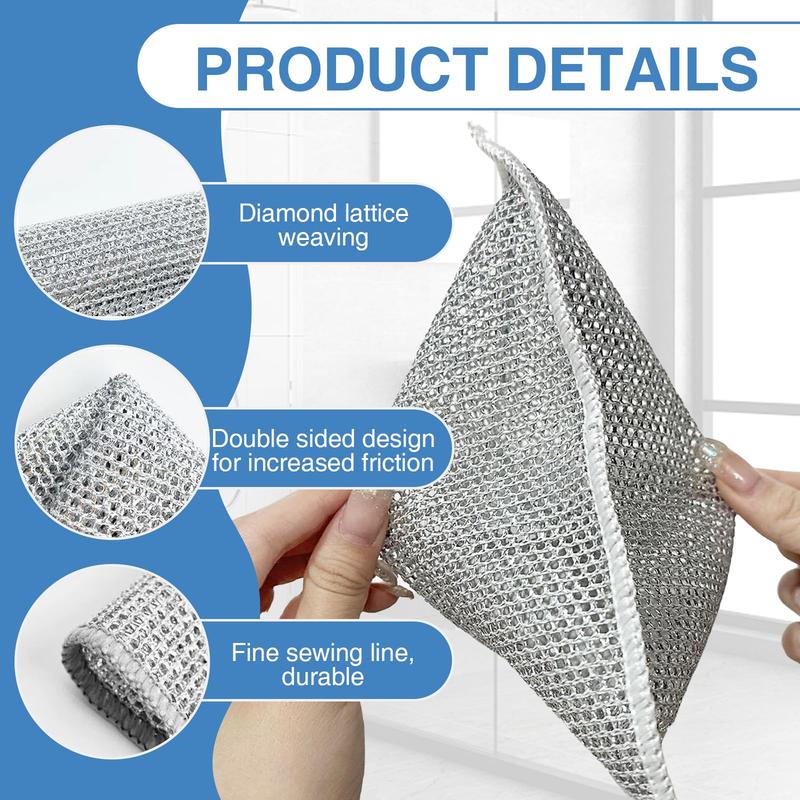
Steel wool scours because it is harder than the grease and harder than the pan — which is exactly why it takes the non-stick with it.
This is woven polyester with a metallic finish. The lattice does the scrubbing; the fibre itself is softer than everything you are cleaning.
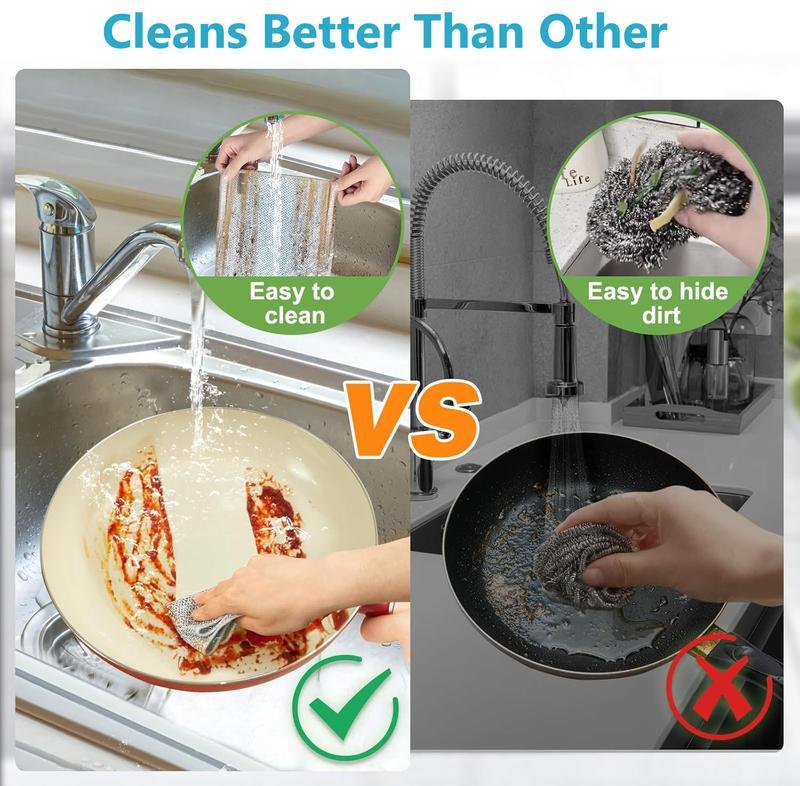
Scrub a pan with steel wool and it goes grey and heavy. Everything that came off the pan is now inside the ball, and it stays there until you throw the ball away.
An open mesh has nowhere to keep it.
Steel wool scrubs and scratches. A sponge is safe and stops working after a fortnight. This is the one that does the job without either problem.
| Feature | AveraWire Dishcloth | Steel woolball | Ordinarysponge |
|---|---|---|---|
| Safe on non-stick and glass | |||
| Scrubs baked-on food off | |||
| Rinses clean instead of trapping grease | |||
| Does not rust or shed fibres | |||
| Still usable after a few months | |||
| Opens out flat to wipe a worktop |
★★★★★I tested it on the shower tap first because I did not believe it. Not a single mark.
Lucia F.Verified buyer
★★★★★Took burnt sugar off a non-stick pan and the coating is completely fine. That is the whole review.
Denise W.Verified buyer
★★★★★I have one in each bathroom and one in the kitchen. They have been going since the spring.
Carol A.Verified buyer
★★★★★It rinses out. That sounds like nothing until you have squeezed a steel wool ball and seen what comes out of it.
Nadine P.Verified buyer
★★★★★Barely any washing-up liquid on it and it still foams up properly.
Yolanda R.Verified buyer
★★★★★Bought them to stop binning a sponge every three weeks. Have not bought a sponge since.
Marta G.Verified buyer
Steel wool scours because it is harder than the grease and harder than the pan. The pan is what loses. A metallic-looking polyester weave scours on texture instead, so the coating survives.
Most scrub cloths have a working face and a padded back, and you spend half the job holding the half that does nothing. Weaving both faces the same way doubles what you can actually use.
A cut edge on an open mesh unravels, and a frayed cloth gets binned long before the mesh has worn out. A sewn border is a few cents that buys months.
A sponge works by absorbing, which means it keeps everything it picks up and stays wet. A mesh lets it go under the tap and dries between uses. That is the entire smell problem, solved by structure.
No. The fibre is woven polyester, softer than the coating — the scrubbing comes from the lattice texture, not from the material being hard.
It is the first thing everybody tests, usually on a tap or a glass shower screen.
No, and that is the point. It has a metallic finish and it looks like steel wool. It is woven polyester, which is precisely why it can go on a non-stick pan.
Soft plastics and acrylic, painted or matte finishes, and high-gloss lacquer. As with any abrasive, test a corner first on anything coated you would be upset to mark.
Rinse it under a hot tap, wring it, hang it. The open weave dries — the smell only starts if you leave it balled up wet in the sink.
Yes, in a laundry bag. Most people find a hot rinse and a wring is enough for day-to-day.
20 × 20 cm, 7.87 inches square. Folded into quarters it is a scrubbing pad; opened out it wipes a worktop in one pass.
Months rather than weeks. The weave does not collapse like a sponge and there is no steel in it to rust apart. It goes when it looks tired, not on a schedule.
No. Whatever you already use, and less of it — the fine pores foam up on very little.
The part that sold me is that it rinses out. My sponges always ended up smelling like whatever I cooked three days ago, this one goes under the tap and the grease is gone.
It does not hold water like a sponge which took me a couple days to get used to. Now I prefer it because it does not sit there wet and heavy. Rinses in about three seconds.
Was tired of throwing out slimy sponges every couple weeks. This gets rinsed and it is clean, no slime, no smell. Have not bought a sponge since I got it.
Bought it after a sponge fell apart in my hand mid dish. This has not lost a thread. Six months in and it is the same cloth.
The white porcelain in my laundry sink was gray from paint brushes and who knows what. This got it a lot lighter and did not scratch the surface. It took some work but it worked.
It does what it says on pans and the sink. On old grout it needs help from a brush. Fair enough for the price.
I keep one in the kitchen, one in the guest bath and one in the main bath. Having one already there means I actually clean instead of putting it off. Simple but it works.
It is a good product and I am glad I bought it. I would not oversell it, it is a very good scrubbing cloth. My sink and pans are cleaner.
The best part is you can fold it into a corner or a groove. My sponge never got into the corners of the sink. This one gets in there.
My daughter has one at her place and I got one after using hers over the holidays. Mine has been in daily use since. She was right about it and I told her so.
Have used it on stainless, glass, chrome, ceramic and enamel. Nothing has been marked. I stopped keeping a separate scrubber for each thing.
The cleaning part is great. I still keep a soft cloth for drying since this one does not absorb. Two different jobs, two different tools.
Gave one to my mom, one to my sister and kept one. All three of us still have them months later. The family group chat is mostly about this thing now.
My glass measuring cup had baked sugar on the bottom from a candy attempt. It came off in a minute with no marks on the glass. That thing was going in the trash.
Takes a minute to get used to since it does not soak up water like a sponge does. Once I stopped expecting that it made sense. Now I like that it does not stay soggy.
Was worried about rust marks in my sink because that is what happened with the old scrubbers I used. Nothing like that with this one, and no little fibers left behind either. It just rinses and dries.
My apartment has an old stainless sink with scratches from whoever lived here before. This has not added a single new one in three months of daily use. It just cleans it.
Bought it because my sponge holder always had mildew under it. This dries hard and flat so nothing grows on it. The kitchen smells cleaner.
Have not seen any rust or any threads coming loose. My old scrubber was leaving little wires in the drain. This one does not shed anything at all.
Bought one for my mom because she still uses those pink sponges that fall apart. She called me to ask where I got it, she has been scrubbing her stainless pans with it all week.
The little pores in the fabric make so much foam it is almost funny. A drop of soap goes a long way. I have not bought dish soap in a while.
Cleaned the glass shower enclosure at my parents place while I was visiting. My mom did not recognize it. She ordered one before I left the house.
My wife bought this and I made fun of it. Then I used it on my grill tools and stopped making fun of it. She has not let it go.
i have used this on my ceramic cooktop, the oven glass, three mirrors and every faucet in my house. not one scratch anywhere. thats not an exaggeration
went at a drinking glass with it on purpose to see if it would scratch. held it up to the window after and it was perfectly clear. thats when i started using it on everything
Its fine, does what it says. I would not oversell it but my pans are cleaner and I am not buying sponges anymore. Good purchase overall for me.
Ordered one after my coworker showed me hers at lunch. It arrived in four days and I used it that night. The sink came out cleaner than the sponge ever got it.
Was skeptical because it feels like something that belongs in a garage. Turns out it is fabric, just woven in a way that scrapes. My glass baking dishes are all fine.
Was going to throw out a pot with burnt sugar in the bottom. This got it out over two sessions of soaking and scrubbing. The pot is fine and back in the cabinet.
Rinsing it is the whole thing for me. You hold it under the tap for a few seconds and all the grease leaves. A sponge just soaks it in and keeps it forever.
Took about nine days to get here which was longer than I wanted. The cloth itself is good though and I have been using it on the sink every night. No complaints about the product itself.