Why pumice and not a scouring pad
A scouring pad is harder than the glaze it is sitting on, which is why it leaves a dull haze you cannot undo. Pumice sits in the gap between the scale and the porcelain, so it removes one and leaves the other.

Cart (0)
Your cart is empty


Avera Pumice Toilet Stone
That ring is not dirt. It is mineral, baked onto the glaze by hard water, which is why the brush polishes it and the bleach whitens everything around it and leaves it exactly where it was.
Soak the stone in water for about two minutes before you start. Keep the surface wet the whole time, work in short strokes with light pressure, and let the stone do the cutting rather than leaning on it.
Rinse the bowl when you are done. Never use it dry — a dry stone drags, and dragging is what marks a surface.
Not glazed porcelain, if it is wet. Pumice is softer than the glaze and harder than the scale sitting on top of it, which is the whole reason it works where a scouring pad would be a bad idea.
If you are nervous, test a patch under the rim first. The two rules are: soak it, and keep it wet.
Not on acrylic or fibreglass baths and shower trays, not on glass, chrome, stainless steel, painted or matte finishes, and not on non-stick pans. Those are all softer than the stone.
Glazed porcelain, ceramic tile, cast iron grates and enamel are what it is for.
Because it is being used. Pumice works by giving up its own surface as it cuts, so a stone that never wears down is a stone that is not doing anything.
The handle is the part you keep. It clips off and takes the next stone.
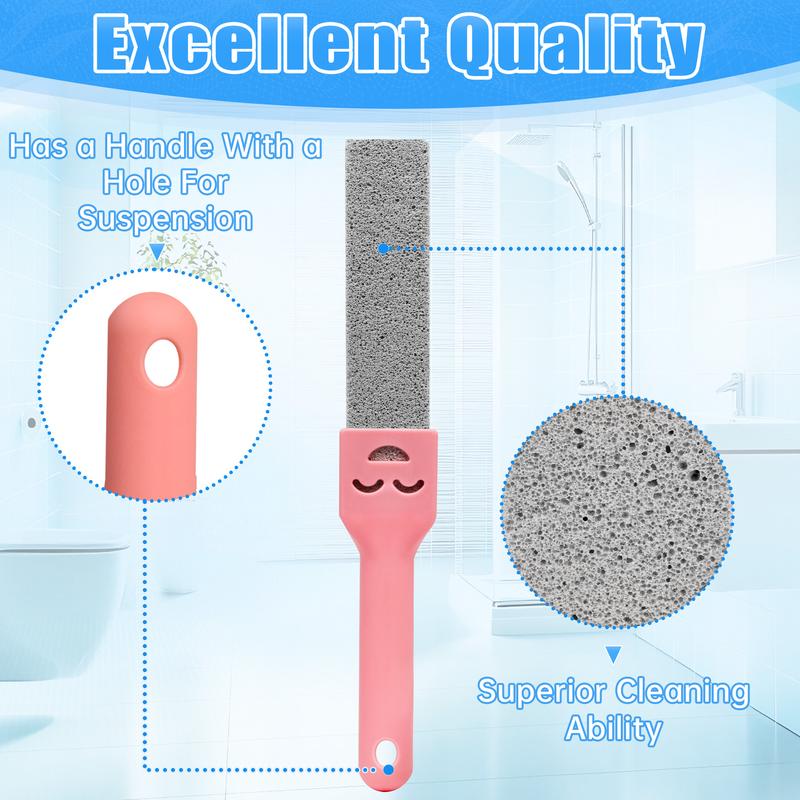
A toilet brush is nylon bristles on a stick. Against mineral scale that has bonded to glazed porcelain it does nothing except move water around and polish the stain.
Pumice is volcanic rock full of holes. It is harder than limescale and softer than the glaze, so it abrades one and leaves the other alone.
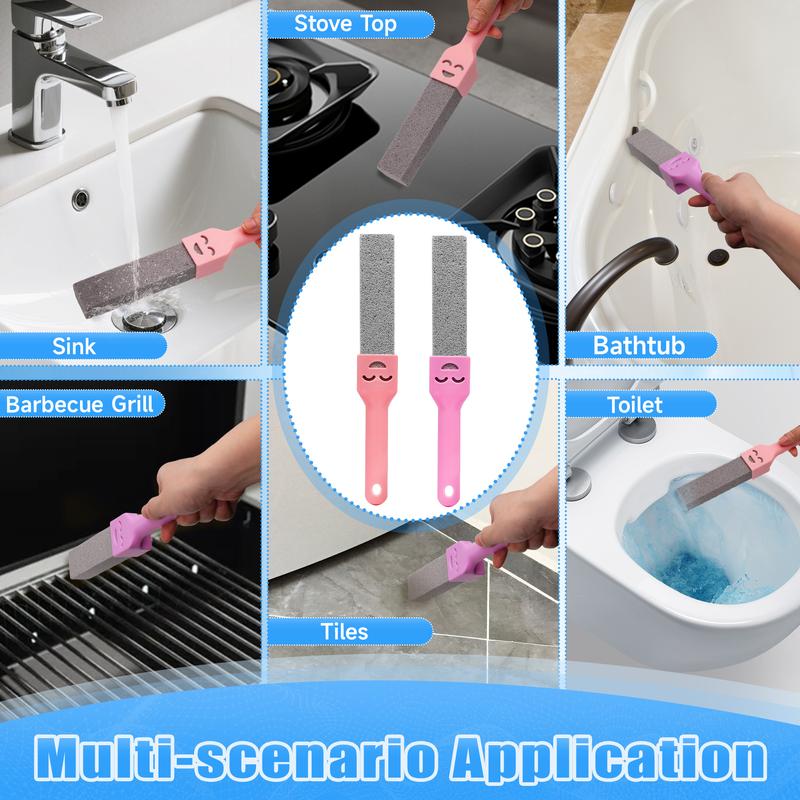
Anywhere hard water leaves a line or heat bakes something on, the same stone handles it. Several of the people who swear by these never take theirs into the bathroom at all.
Bleach is a disinfectant, not a descaler. A brush is for what has not dried on yet. Neither of them was ever going to move a mineral ring.
| Feature | AveraPumice Stone | Toiletbrush | Bleachor cleaner |
|---|---|---|---|
| Removes hard water rings | |||
| Removes limescale and rust marks | |||
| Safe on glazed porcelain | |||
| No fumes, nothing to store out of reach | |||
| Works on the hob and the grill too | |||
| Nothing to buy again next month |
★★★★★Six years of that ring. Ten minutes of scrubbing and it is gone. Mostly I am annoyed I did not try this sooner.
Melissa R.Verified buyer
★★★★★We are on well water, so the bowl was permanently orange. It is white again.
Tricia N.Verified buyer
★★★★★It is not effortless — you do have to scrub. But it actually works, which the brush never did.
Yvonne C.Verified buyer
★★★★★Soak it first. I did not the first time and I could hear it dragging. Wet, it glides.
Karen B.Verified buyer
★★★★★I bought it for the toilet and I use it more on the hob. The burner grates came up like new.
Sandra P.Verified buyer
★★★★★No scratches on the porcelain at all. I went over it with a torch afterwards because I was nervous.
Denise A.Verified buyer
A scouring pad is harder than the glaze it is sitting on, which is why it leaves a dull haze you cannot undo. Pumice sits in the gap between the scale and the porcelain, so it removes one and leaves the other.
Water is what turns a rough stone into something that glides. It also lets the stone crumble slightly as it works, constantly exposing fresh surface instead of polishing itself smooth.
Ten and a half inches assembled means you reach under the rim and around the trap without putting your hand in the bowl. There is a hole in the end so it hangs and dries.
That is the mechanism, not a defect. The abrasive is consumed doing the work — and the handle clips off and takes the next one.
Not glazed porcelain, provided the stone is wet. Pumice is softer than the glaze and harder than the scale on it.
Soak it two minutes, keep the surface wet while you work, and test a patch under the rim first if you would rather be sure.
Yes. It is the one instruction that matters. A dry stone drags across the surface; a soaked one glides and crumbles slightly as it cuts.
Actual dirt and organic staining still want a cleaner. This is for mineral: hard water rings, limescale, rust marks and baked-on carbon.
Acrylic and fibreglass baths and shower trays, glass, chrome, stainless steel, painted or matte finishes, and non-stick pans. All of those are softer than the stone.
Harder than you would like. A bad ring is a genuine ten minutes of work, and that is worth knowing before you order. It is one ten-minute job rather than a stain you look at every day.
Because it is working. Pumice gives up its own surface as it cuts — that is what keeps it abrasive instead of polishing itself smooth.
Yes, on cast iron grates, burner tops, oven racks and grill bars. Cold surface, wet stone. Not on non-stick or on anything enamelled in a colour.
It is a piece of volcanic rock on a plastic handle. No chemicals, no fumes, nothing to keep on a high shelf.